

Unlike standard contacts that provide vision correction alone, specialty lenses are designed with optical features intended to influence how the eye grows. At Eye See Optique — Arlington, specialty lenses are prescribed only when diagnostic findings indicate that they may be an appropriate part of a comprehensive management plan.

What Are Specialty Soft Lenses for Myopia Control?
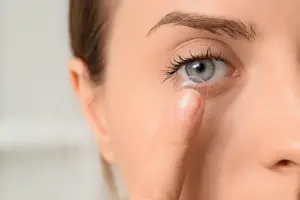
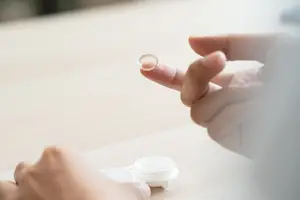
Specialty lenses used for myopia management differ from regular contact lenses in both purpose and design. While they correct blurry distance vision, their optical structure is tailored to help reduce the rate of myopia progression. These lenses are worn during the day and may be well-suited for children who are comfortable handling contacts and prefer the flexibility they provide for school, sports, and other daily activities.
Who Are Specialty Contact Lenses For?
At Eye See Optique Arlington, our eye doctor explains what the lenses are designed to do, how they work and care, and what monitoring looks like so families know what to expect.
Supporting Myopia Management
Myopia tends to progress when the eye elongates. Specialty lenses help address this by altering how light reaches the peripheral retina, which may help slow this axial growth. When worn consistently, they provide clear daytime vision while also contributing to long-term management goals.
Determining Whether Specialty Lenses Are Appropriate
We start with an evaluation of your child’s prescription history, rate of change, and overall readiness for contact lens wear. During a myopia management visit, our Arlington optometrist reviews:
-
Refractive error trends over time
-
Corneal health and shape, assessed through diagnostic imaging
-
Visual demands, including schoolwork, screen use, and sports
-
Age and maturity level, especially regarding safe lens handling
-
Progression risk factors, including family history and current prescription
If specialty lenses are not clinically indicated, we explain the findings clearly and discuss alternative strategies that may be more appropriate for your child’s long-term eye health.
Fitting Specialty Lenses in Arlington
If specialty lenses are recommended, the fitting process includes a detailed exam and a structured, supervised introduction to contact lens wear. Your child’s visit may include:
-
Diagnostic measurements to determine the appropriate lens type and power
-
In-office lens trial to assess comfort, lens movement, and initial vision
-
Hands-on training in insertion, removal, and hygiene
-
Parent education, including expectations for home care and safety
-
Early follow-up appointments to verify correct use and early adaptation
Our goal is to ensure that both the child and the caregiver feel confident before the child wears lenses independently at home.
Specialty Contact Lenses FAQs
Are specialty soft lenses safe for children to wear? Yes. When prescribed appropriately and worn with proper hygiene, specialty soft lenses are considered safe for children and teens.
How do these lenses differ from standard contact lenses? Standard lenses correct vision only. Specialty myopia-control lenses include an optical design intended to influence how the eye grows.
How soon will we know whether the lenses are helping? Myopia control is assessed over several months. During follow-up visits, we compare prescription changes and biometric measurements to evaluate how your child is responding.
Can specialty lenses be combined with other myopia treatments? Yes. Depending on the findings, specialty lenses may be part of a multi-method approach.

If you would like to understand whether specialty lenses may play a role in managing your progressing myopia, our Arlington optometrist can help. A myopia management consultation allows us to identify suitable treatment options, explain expected outcomes, and outline the monitoring required to support long-term eye health.